You are already doing the job. You are showing up for service users, supporting your team, and carrying responsibilities that go well beyond your job title. The only thing missing is the qualification and the pay that comes with it. Here is the part most care workers do not realise: funding for the Level 3 Diploma in Adult Care UK is not a rumour or a one-off grant. It is a structured, government-backed route that eliminates tuition fees for eligible learners, and right now, thousands of places are available. This article tells you exactly which funding route applies to you, whether you qualify, and how to secure your place before the academic year allocation runs out.
In This Guide
The Qualification That Opens Senior Care Doors
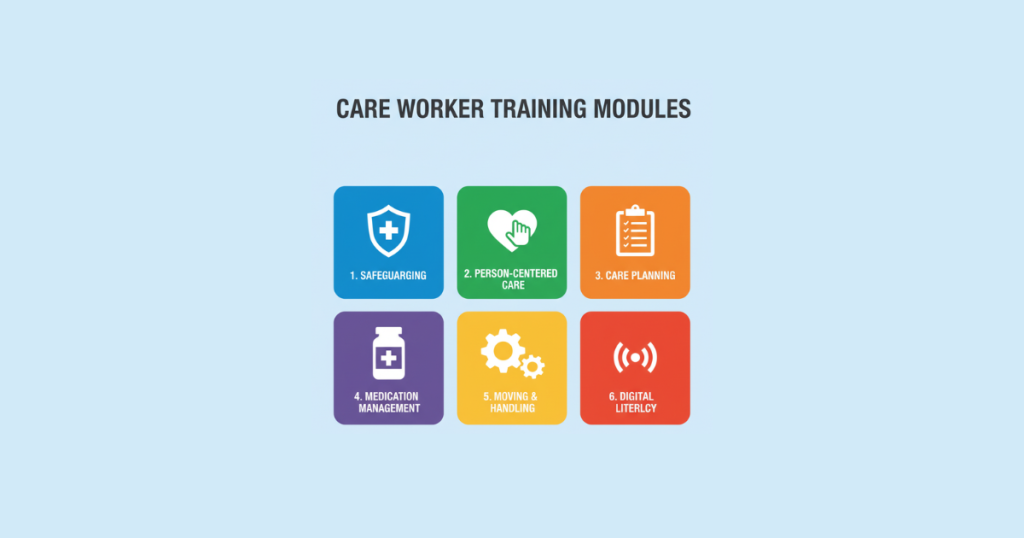
The Level 3 Diploma in Adult Care (RQF) is the nationally recognised standard for senior and leadership roles in health and social care. It is Ofqual-regulated, aligned with Skills for Care standards, and accepted by CQC-registered providers across England as proof of senior competency. It is not a short awareness course. It covers safeguarding, person-centred care, duty of care, and leading practice within a team, a skill that distinguishes a care assistant from a senior care worker, team leader, or named key worker. More practically, without this diploma, most providers will not promote you to a senior role, regardless of how long you have worked there. With it, you are qualified, and the pay gap between the two levels is material.
Three Funding Routes — And How to Choose Yours
The term ‘ fully-funded level 3 qualifications ‘ covers multiple mechanisms. Knowing which one applies to your situation determines how quickly you can start.
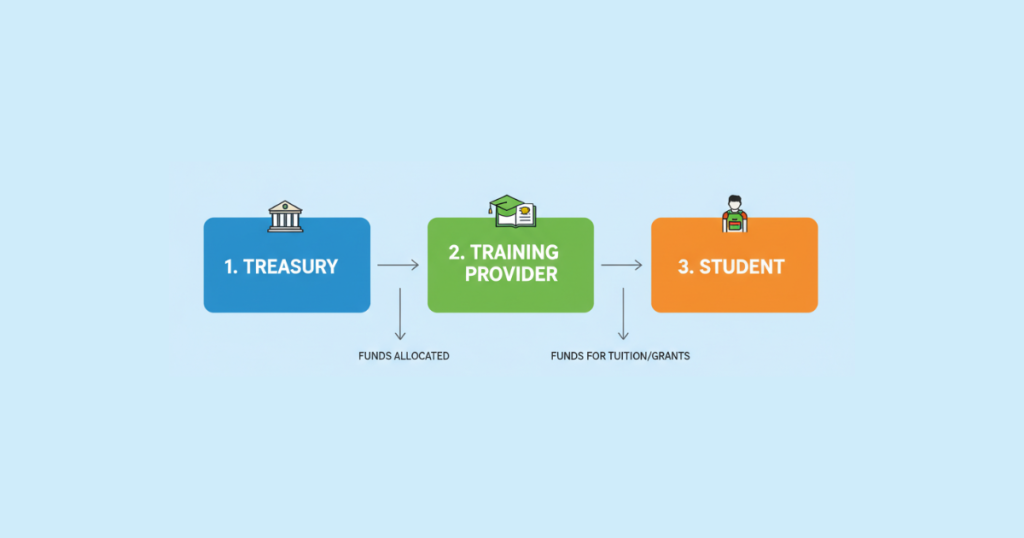
The Adult Education Budget, administered by the ESFA, provides funding for the Level 3 Diploma in Adult Care UK for adults aged 19 and over who have been resident in England for at least three years. If you earn below the threshold or receive qualifying benefits, the full course fee is subsidised by the government. You pay nothing. This route does not require employer involvement. You can enrol independently, study around your shifts, and qualify on your own timeline.
If you are already employed in a care role, the government-funded Level 3 Adult Care Apprenticeship route is the most financially powerful option available. Your employer covers training costs using apprenticeship levy funds they are already paying into, whether they use them or not. You continue working. You continue earning your full wage. You complete your qualification. At the end, you are a credentialed senior care worker, and your employer has a more capable, retained member of staff.
Many CQC-registered providers actively fund staff through funded adult Level 3 programmes because a qualified workforce improves their inspection outcomes. If your employer benefits from the Levy, they can allocate those funds to your training through their digital apprenticeship account with no out-of-pocket cost to either party. If your employer is not a levy-paying one, the government covers 95% of training costs under co-investment. Your employer contributes just 5%, typically a few hundred pounds across the full programme.
Eligibility at a Glance
Most care workers who look into this assume they will not qualify. Most are wrong. Check the criteria below. If you tick two or more columns, you have a route in.
* Even if you hold a Level 3 in an unrelated field, co-funded arrangements may still apply. Speak to an advisor before ruling yourself out.
What This Diploma Actually Pays
Funding for Level 3 qualifications matters because the credential has real market value. According to Skills for Care salary data, senior care workers in England earn measurably more than care assistants, and that gap compounds over a career. Beyond salary, a Level 3 qualified professional is also eligible for roles that carry formal responsibility, namely key worker, shift leader, and deputy support manager. These are not cosmetic titles. They come with structured pay scales, greater autonomy, and, for those on overseas visas, stronger grounds for visa renewal and settlement. If you are currently working under a health and care worker visa, completing a recognised Level 3 qualification also reinforces your professional standing in the UK care sector. See our full guide on Health and Care visa UK eligibility for how qualifications interact with your immigration pathway.
Studying While Working Full-Time Is the Design, Not the Exception
The most common reason care workers delay starting is time. Twelve-hour shifts, unsociable hours, and genuine exhaustion are not excuses they are real barriers. Which is precisely why the Online Level 3 Diploma in Adult Care RQF was built the way it is. Theory and knowledge units are completed on a digital platform at 11 pm, if that is when you have ten minutes. Competency assessments are conducted by a workplace assessor in your actual care setting, during your normal working hours. You are not assessed on essays or timed exams. You are assessed on what you already do every day. Most learners complete the full diploma in 12 to 18 months, investing roughly five to seven hours per week. Many report the biggest challenge is starting, not sustaining.
Why Smart Employers Fund This for Their Teams
If you are a registered manager, HR coordinator, or training lead reading this, the business case for funding your staff through funded adult-level 3 programmes is direct. CQC inspections assess workforce competency as a core quality indicator. A team where senior staff hold recognised Level 3 credentials are measurably less likely to receive an ‘Inadequate’ or ‘Requires Improvement’ outcome. That is not a soft benefit, it is the difference between operating normally and being placed in special measures. Staff turnover in adult social care costs the sector an estimated £2.6 billion annually. Providers who invest in qualification pathways see lower attrition. An employee working toward a funded qualification has a concrete reason to stay. And if your organisation pays the Apprenticeship Levy, those funds expire if unused. A government-funded level 3 adult care apprenticeship lets you deploy that money purposefully, building the senior workforce you need without spending from your training budget.
Frequently Asked Questions +
No, an upper age limit does not exist. The AEB-funded route requires learners to be 19 or over; the apprenticeship route is open from age 16, provided the learner is employed. Career changers in their 40s and 50s regularly complete this qualification, and many report it is the most professionally rewarding thing they have done.
Yes, and the majority of learners do exactly that. Theory is completed online at your own pace. Competency is assessed in your workplace by a trained assessor. Under the apprenticeship route, 20% of your contracted hours must be dedicated to off-the-job learning time, which your employer is legally required to protect. There are no campus attendance requirements.
Holding a recognised Level 3 qualification strengthens your professional profile and demonstrates sector competency to UK Visas and Immigration. For a full breakdown of how qualifications affect your visa pathway and settlement eligibility, visit our UK Health and Care visa eligibility guide . Always take advice from a registered immigration advisor for your individual circumstances.
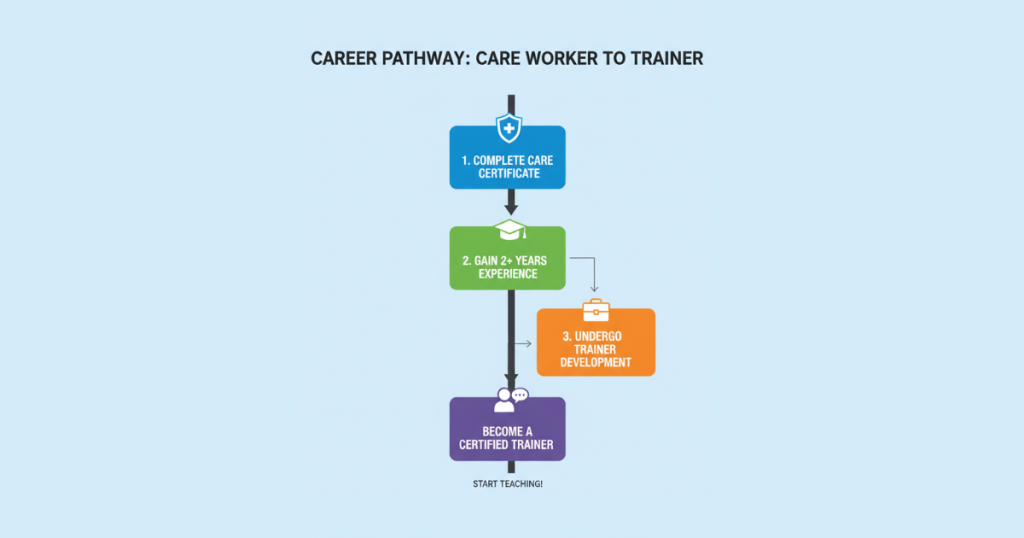
Directly: senior care worker, named key worker, team leader, shift supervisor, and care coordinator. With experience: deputy manager and registered manager roles carrying salaries of £28,000–£38,000 in England. The Level 3 also qualifies you to pursue the Level 4 Diploma in Adult Care and the Level 5 in Leadership and Management, both of which may themselves be available through funded adult Level 3 programmes or Skills for Care bursaries.
Your Qualification. Government-Funded. Start Now.
You have read the routes. You have checked the eligibility. If you are a care worker aged 19 or over, working in England, earning an average sector wage, there is almost certainly a funding route with your name on it.
Places on funded adult Level 3 programmes are allocated by academic year. They are not unlimited. Every month you wait is a month you spend without the qualification and without the senior title and pay grade that come with it.